Alert : The site is undergoing maintenance. Some functionality including sign-in may be impacted
Saturday, February 21, 6:00 pm through Wednesday, March 04, 12:00 am (EST), 2026
Ordering can continue through fax and phone.
Contact us
Alert : The site is undergoing maintenance. Some functionality including sign-in may be impacted
Saturday, February 21, 6:00 pm through Wednesday, March 04, 12:00 am (EST), 2026
Ordering can continue through fax and phone.
Contact usAlert : The site is undergoing maintenance. Some functionality including sign-in may be impacted
Saturday, February 21, 6:00 pm through Wednesday, March 04, 12:00 am (EST), 2026
.Ordering can continue through fax and phone.
Contact usLooks like you're visiting us from {countryName}. You’re currently on the {originCountryName} site. Do you want to switch to a different country site?
Testing {countryName} {originCountryName}
BD® AbSeq Antibody-Oligos enable single-cell CITE-seq analyses (simultaneous detection of proteins and mRNA expression) and help deepen your understanding of protein biology to accelerate your single-cell research.
In addition to cell surface protein analyses, BD® AbSeq Antibody-Oligos can now also be used for intracellular CITE-seq.
Learn more from the BD® AbSeq Assay brochure
Check out our BD® AbSeq Immune Discovery Panel
Check out the Intracellular CITE-seq Assay using BD® AbSeq Antibody-Oligos
FEATURES
The assay:
APPLICATIONS
Detect up to 100 different cell surface markers using the BD® AbSeq Assay with high confidence
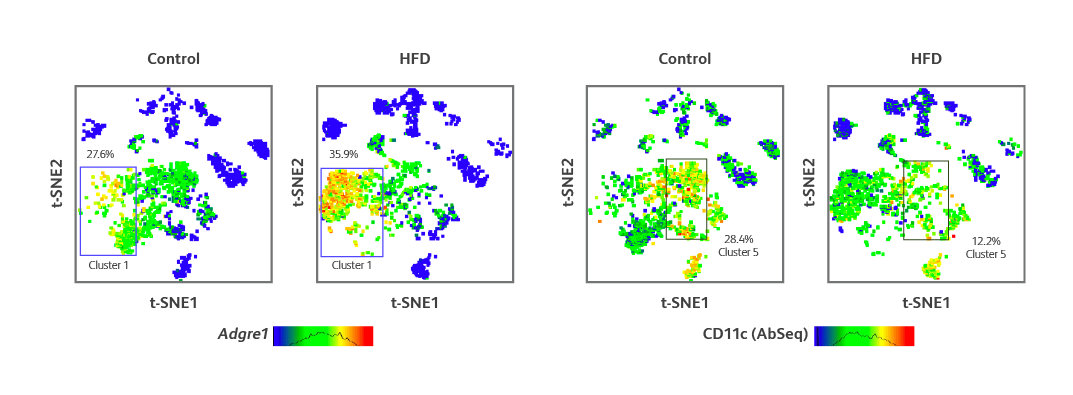
Single-cell AbSeq and targeted mRNA-Seq analyses of myeloid cell populations localized in adipose tissue from control and HFD mice. t-SNE visualization of differences in expression of Adgre1 (encodes F4/80) gene expression and CD11c protein expression (identified via AbSeq) in different cell clusters of myeloid cells from the adipose tissue of HFD mouse.
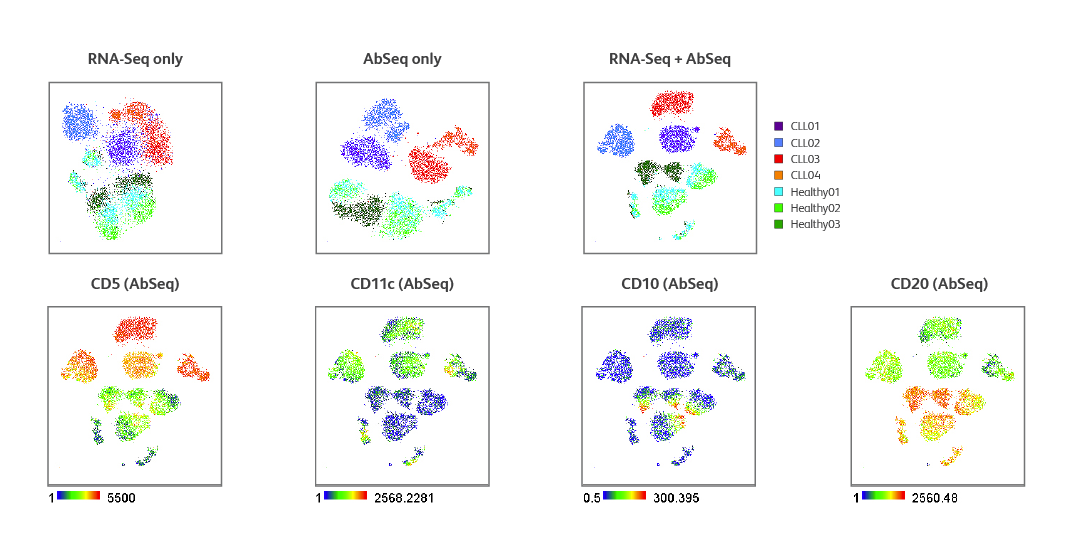
Multiomic analysis of CLL samples and healthy donors. t-SNE clustering of healthy and CLL patient samples using mRNA or surface protein only or a combination of both. Expression of key cell surface markers identified by the BD® AbSeq Assay in both healthy and CLL samples.
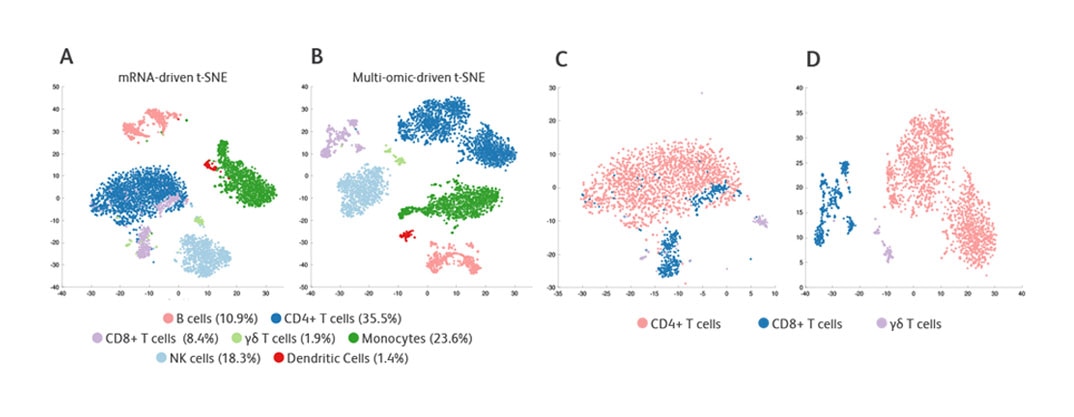
t-SNE clustering of PBMCs using mRNA or multiomic data. A, B. t-SNE coordinates are calculated for all PBMCs based on mRNA data only. Cells are colored based on cell type. C, D. Same coordinates as in A and B, but only T-cell subsets are displayed. Markers used for cell-type definition (protein data used for all markers except FcγRIIIa, for which mRNA data were used)—CD4 T-cells: CD3+CD4+; CD8 T-cells: CD3+CD8+; γδ T-cells: CD3+TCRγδ+; B cells: CD19+; Monocytes: CD14+; NK cells: CD3-CD45RA+ FcγRIIIA-high.
Please fill in the following information and we will get in touch with you regarding your query.
This form is intended to help us improve our website experience. For other support, please visit our Contact Us page.